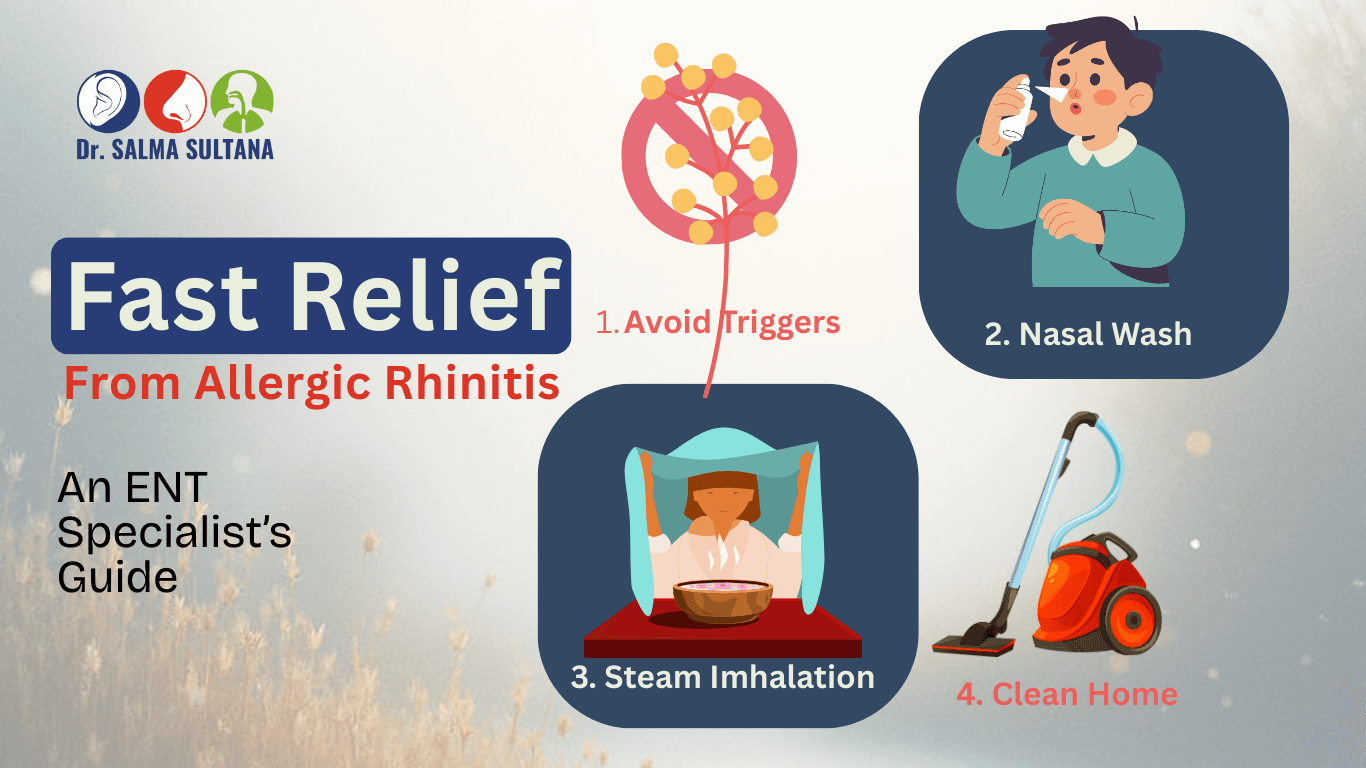
Fast Way to treat Allergic Rhinitis: An ENT Specialist’s Guide
Allergic rhinitis—often called hay fever or nose allergies—is one of the most common reasons people visit an ENT clinic. Sneezing, runny nose, blocked nose, itchy eyes, headaches, and disturbed sleep can make daily life uncomfortable, especially during pollen season or dust exposure.
While there is no “instant cure” for allergies, there are scientifically proven ways to get fast relief from allergic rhinitis and reduce symptoms long-term. As an ENT specialist and allergist, here is a clear and simple guide to help you breathe easier.
What Causes Allergic Rhinitis?
Allergic rhinitis occurs when your immune system reacts to substances like:
- Dust mites
- Pollen
- Animal dander
- Mold
- Strong smells or pollutants
Your nose becomes inflamed and produces excess mucus, leading to typical allergy symptoms.
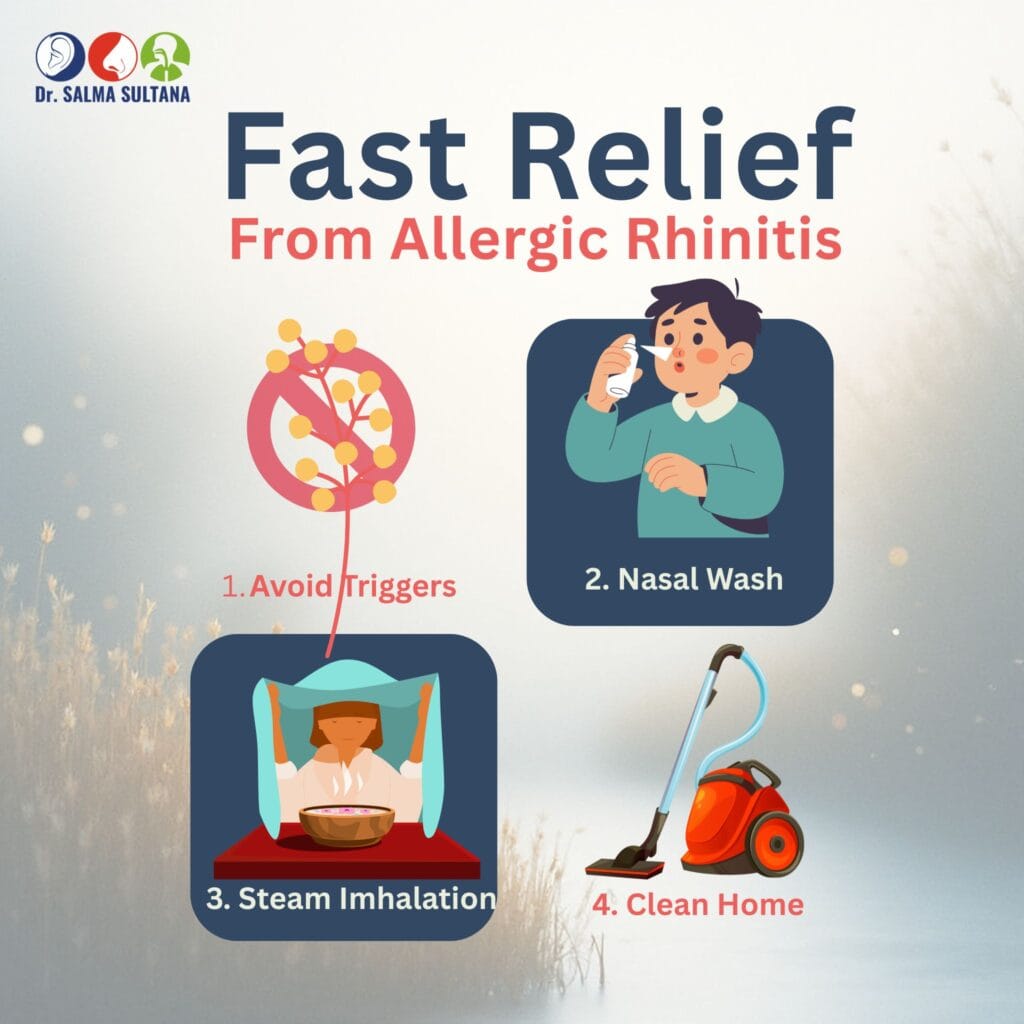
Fastest Ways to Get Relief From Allergic Rhinitis
1. Reduce Exposure to Allergens (Quickest Relief)
The first line of defence is avoiding what triggers your allergy.
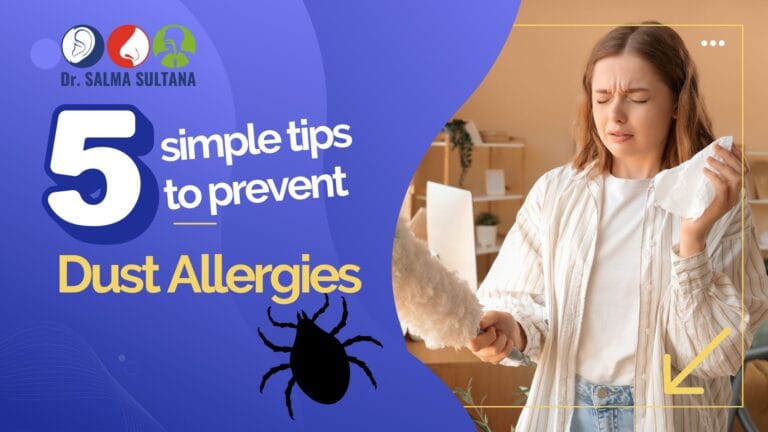
Dust Allergy
- Use dust-proof pillow and mattress covers
- Wash bedsheets weekly in hot water
- Avoid carpets, heavy curtains, and stuffed toys
- Use a HEPA air purifier to reduce indoor dust
Pollen Allergy
- Keep windows closed during early morning
- Take a shower and change clothes after coming from outdoors
- Use sunglasses to protect eyes from pollen
Pet Allergy
- Avoid close contact with pets
- Keep pets out of the bedroom
- Use HEPA filters to reduce dander
Mold Allergy
- Fix damp areas
- Keep bathrooms dry and well-ventilated
- Use a dehumidifier if humidity is high
2. Nasal Saline Wash (Immediate Relief in Minutes)
A simple salt water nasal rinse can:
- Clear mucus
- Reduce irritation
- Wash out allergens directly from the nose
Using a Neti pot or squeeze bottle gives very fast relief and is safe for most people.
3. Steam Inhalation for Blocked Nose
Steam helps loosen mucus and opens nasal passages.
For quicker results:
- Use plain water (avoid strong oils)
- Inhale for 5–10 minutes
This is especially helpful if your nose is severely blocked.
4. Maintain a Clean Home Environment
- Vacuum using a HEPA filter machine
- Wet-mop instead of dry sweeping
- Avoid incense sticks, strong perfumes, and room fresheners
- Keep windows closed during pollution spikes
Indoor air quality has a huge impact on allergy symptoms.
4. Maintain a Clean Home Environment
- Vacuum using a HEPA filter machine
- Wet-mop instead of dry sweeping
- Avoid incense sticks, strong perfumes, and room fresheners
- Keep windows closed during pollution spikes
Indoor air quality has a huge impact on allergy symptoms.
6. Immunotherapy (Long-Term Control)
For people with chronic, severe, or year-round allergies, allergy testing followed by allergen immunotherapy (allergy shots or drops) is the only treatment that can reduce allergy at its source.
It doesn’t give instant results but offers long-term cure-like benefits over months to years.
Lifestyle Tips for Faster Recovery
- Take a shower before bed—removes pollen and dust from hair
- Wash hands and face after outdoor exposure
- Eat anti-inflammatory foods (ginger, turmeric, fruits)
- Stay physically active to improve immunity
- Sleep well to reduce inflammatory response
When Should You See an ENT Specialist?
Seek medical help if:
- Symptoms last more than 2–3 weeks
- You get repeated sinus infections
- You have difficulty breathing at night
- Home measures are not helping
- Symptoms affect work, sleep, or quality of life
Early treatment prevents complications like sinusitis and nasal polyps.
Final Thoughts
The fastest way to get relief from allergic rhinitis is a combination of:
✔ Avoiding triggers
✔ Clearing allergens from the nose
✔ Improving indoor air quality
✔ Following healthy nasal practices
While allergies cannot be “cured overnight,” with proper care and consistent habits, you can live nearly symptom-free and prevent flare-ups.